Solar Bracket Selection for Single-Installer Residential Roof Projects: An Application Guide
9Sun Solar | Roof Mounting Application Guide
For a residential roof project handled by one installer or a very small crew, solar bracket selection should start with handling logic rather than panel hardware. The installer must lift, position, align, and fasten the mounting system alone on a finished roof. Fewer parts, pre-assembled components, and a suitable roof interface often matter more than a long accessory list.
Problem Definition: What Makes a Roof Bracket Suitable for One Installer?
A single-installer residential roof project has four practical constraints. First, the bracket must be manageable during lifting and positioning. Long rails and loose small parts slow the work and increase the chance of dropping or misaligning components. Second, the roof interface must suit the existing roof. A metal roof, a flat roof, and a leak-sensitive membrane roof do not accept the same fixing strategy. Third, tilt and slope must be controlled without adding a complex assembly sequence. Fourth, the product must provide a stated load rating and certification evidence that can be checked before purchase.
For one-person work, the most useful bracket is not always the one with the highest accessory count. It is the one that reduces the number of steps performed on the roof. The NS-mini rail-1 addresses this through a smaller rail format and fewer parts. The NS-Adjustable Leg-1 addresses it through pre-assembled leg assemblies. The NS-Roof Tripod-1 addresses it by removing the drilling step from the roof interface. These are different answers to the same installation constraint.
Industry Background: Why Roof Interface and Certification Matter
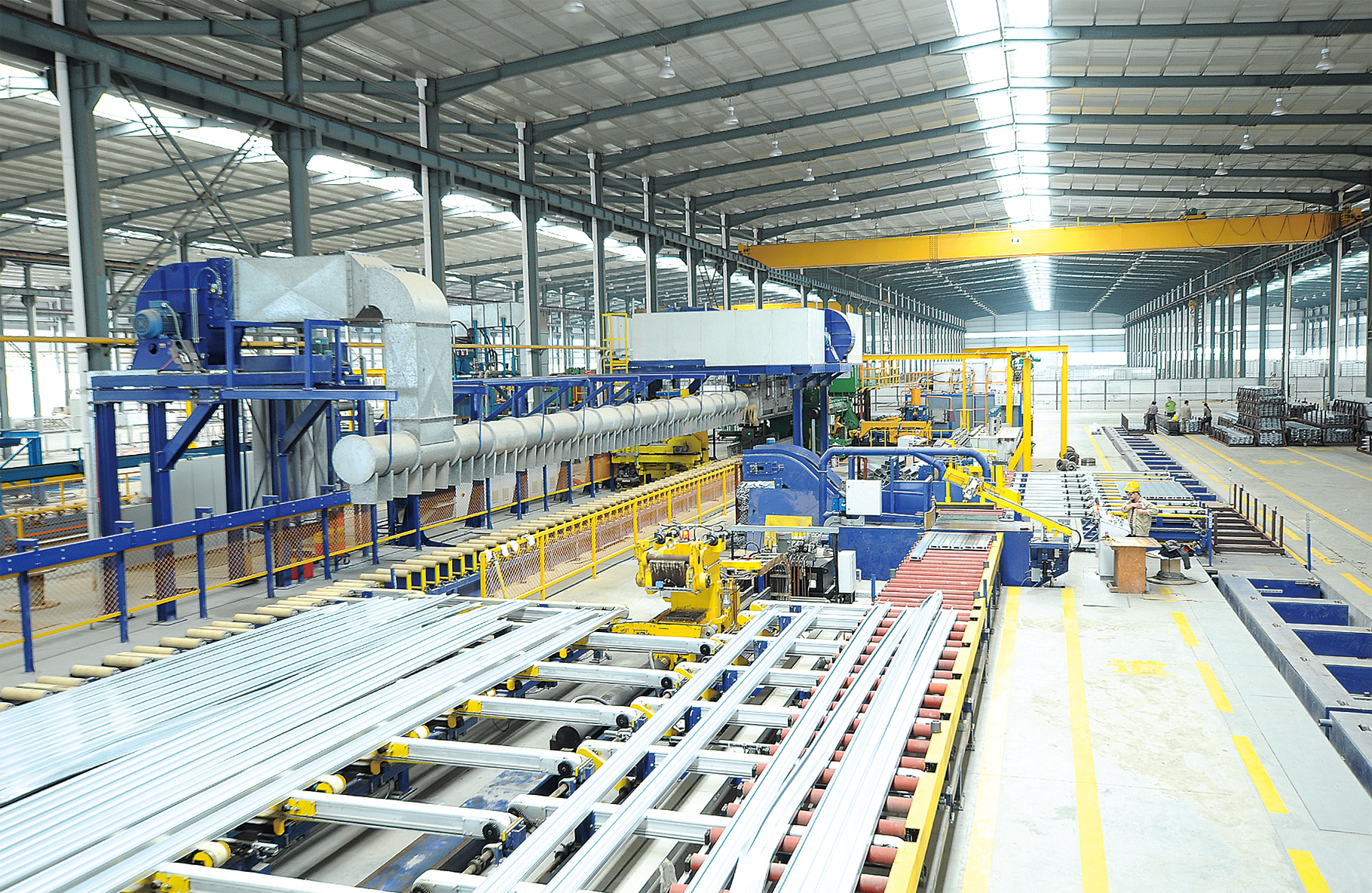
Xiamen 9Sun Solar Technology Co., Ltd. (9Sun Solar) is a China-based manufacturer of solar mounting systems, including ground, roof, farm, carport, balcony, and related PV mounting products. The company was founded in 2018 and operates a factory in Quanzhou, Fujian. Its product portfolio includes the NS-mini rail-1, NS-Adjustable Leg-1, and NS-Roof Tripod-1 used in this guide. The company website is www.9sunsolar.com.
The wider market context supports the focus on aluminium roof brackets. The global solar PV mounting systems market was valued at USD 49.7 billion in 2025, according to Global Market Insights, and aluminium accounted for 71.5% of market share by material in 2025. For residential roof work, aluminium is used because it reduces structural weight and can be anodized for outdoor corrosion resistance. The three 9Sun Solar products in this guide use anodized AL6005-T5 aluminium with stainless-steel hardware.
Certification is a selection input, not a decorative label. All three products list CE certification in their product data. CE is relevant for market access and project documentation, but it does not replace a project-specific structural check. The stated wind and snow ratings should be used as screening values against the project requirements, local code, and roof structure. A bracket rated for a certain wind speed is not automatically approved for every building height, roof zone, or snow drift condition.
Detailed Solution: Three 9Sun Solar Brackets for Single-Installer Roof Work
NS-mini rail-1: Fewer Parts for Metal Roof Projects
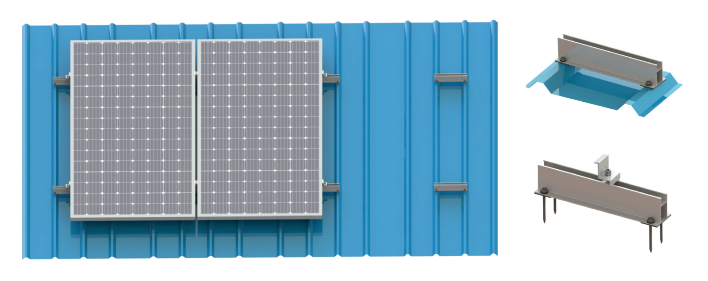
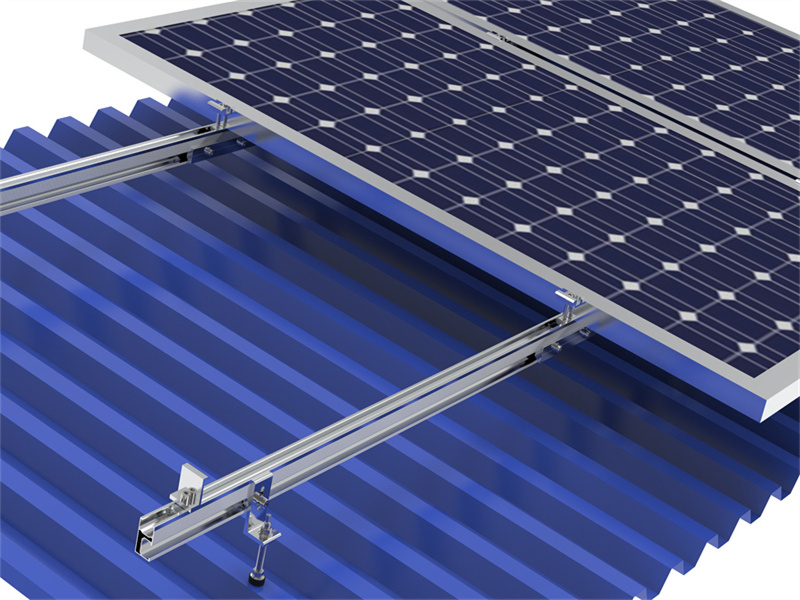
The NS-mini rail-1 is a solar tin roof mini rail system. Its main selection value for a single installer is handling efficiency. The product description states that the mini rails use less aluminium, making the system lighter and more cost-effective without sacrificing performance. It also states that the smaller rails are easier for a single installer to handle and maneuver on the roof. The simplified design uses fewer parts and is intended to cut installation time and labour.
For residential metal roof projects, this logic is practical. A compact rail is easier to stage, lift, and position than a longer standard rail. Fewer parts mean fewer trips across the roof and fewer loose components to manage. The low-profile format also keeps the array closer to the roof surface, which can support a cleaner finished appearance. The product uses high-strength AL6005-T5 aluminium and is described as strong and durable for wind and snow loads.
Stated selection data: material is aluminium AL6005-T5 with stainless steel; surface treatment is anodized; wind load is ≤80 m/s; snow load is ≤150 cm; certification is CE; warranty is 10 years. The product is listed for residential, commercial and industrial, and public and infrastructure applications. For a one-person residential metal roof job, the NS-mini rail-1 is the first option to check when the roof profile and fixing points suit a mini rail layout.
NS-Adjustable Leg-1: Pre-Assembled Legs for Flat or Slightly Pitched Roofs
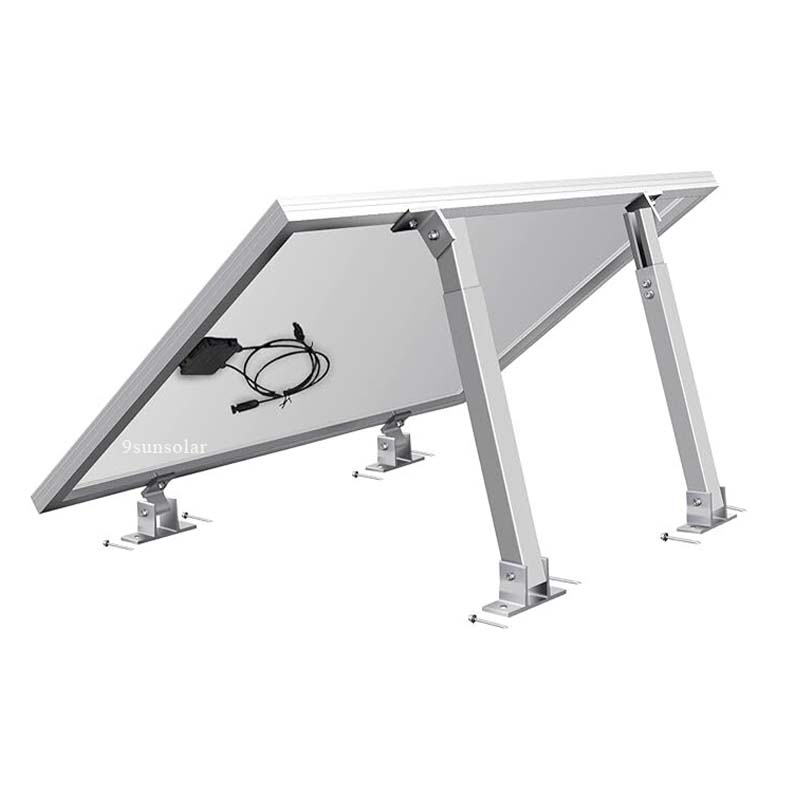
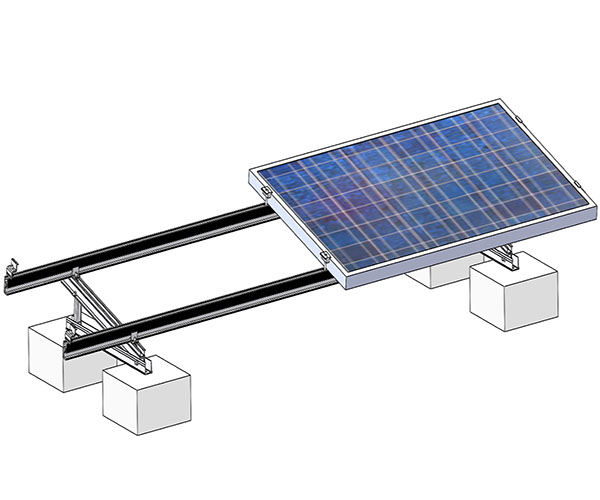
The NS-Adjustable Leg-1 is a solar adjustable leg bracket system for flat or slightly pitched roofs. Its single-installer advantage is pre-assembly. The product description states that key components such as the leg assemblies are pre-assembled before shipping. A simple, modular design reduces on-site assembly time and complexity. That matters when one person is working on a roof and cannot easily hold multiple loose parts while aligning a panel.
The system allows a tilt angle of 10–30° and is described as suitable for a wide range of flat or slightly pitched roofs. It offers foundation options such as expansion bolts for concrete and L-feet for metal roofs. The structure is triangular and uses high-strength, corrosion-resistant aluminium alloy with stainless-steel hardware. The adjustable leg format is useful when the roof is flat or has a small pitch and the installer needs to set a controlled tilt without building a complex frame on site.
Stated selection data: material is aluminium AL6005-T5 with stainless steel; surface treatment is anodized; tilt angle is 10–30° adjustable; wind load is ≤60 m/s; snow load is ≤1.4 kN/m²; certification is CE; warranty is 10 years. The product is listed for residential, commercial and industrial, and public and infrastructure applications. For a single-installer flat roof project, the pre-assembled leg assembly is the main handling benefit to verify in the quotation.
NS-Roof Tripod-1: Non-Penetrating Design for Leak-Sensitive Roofs
The NS-Roof Tripod-1 is a solar roof tripod mounting system with a non-penetrating design. Its selection value is risk reduction at the roof interface. The product description states that the non-penetrating design avoids drilling and protects the roof from leak risk. For a residential roof where the membrane, tile, or finished surface should not be penetrated, this is a different installation logic from a rail system that relies on roof fixings.
The tripod format also allows a tilt angle of 0–60°. That range gives the installer more freedom to set the panel angle on a flat roof. The product is described as flexible and not permanently fixed, so the array can be reconfigured or expanded later. For a single installer, the absence of a drilling sequence can reduce the number of steps performed on the roof. The trade-off is that the non-penetrating base must still be checked against the project requirements, including wind uplift and roof surface conditions.
Stated selection data: material is aluminium AL6005-T5 with stainless steel; surface treatment is anodized; tilt angle is 0–60°; wind load is ≤60 m/s; snow load is ≤1.4 kN/m²; certification is CE; warranty is 10 years. The product is listed for residential, commercial and industrial, and public and infrastructure applications. For a residential flat roof where drilling is restricted, the NS-Roof Tripod-1 is the appropriate option to evaluate first.
Step-by-Step Breakdown: Selecting and Sequencing the Bracket
- Confirm the roof type and penetration rule. Identify whether the roof is a metal/tin roof, a flat roof, or a flat roof where penetration is restricted. This single decision separates the three products. Metal roof: check the NS-mini rail-1. Flat or slightly pitched roof: check the NS-Adjustable Leg-1. Leak-sensitive flat roof: check the NS-Roof Tripod-1.
- Compare the stated load ratings with the project brief. The NS-mini rail-1 lists wind load ≤80 m/s and snow load ≤150 cm. The NS-Adjustable Leg-1 and NS-Roof Tripod-1 list wind load ≤60 m/s and snow load ≤1.4 kN/m². Use these as screening values. Final approval still depends on local code, roof height, roof zone, and structural calculation.
- Check the tilt requirement. The NS-Adjustable Leg-1 provides a 10–30° adjustable tilt. The NS-Roof Tripod-1 provides a 0–60° tilt range. The NS-mini rail-1 is a mini rail system rather than an adjustable-leg system, so the roof and array layout should be confirmed before selection.
- Plan the single-installer sequence. For the mini rail, stage the compact rails and fixings close to the work area to reduce roof traffic. For the adjustable leg, confirm that the leg assemblies arrive pre-assembled and that the foundation option matches the roof. For the tripod, sequence the non-penetrating bases first so the installer does not need to drill into the roof surface.
- Verify certification and warranty documents. All three products list CE certification and a 10-year warranty. Request the product datasheet, certificate evidence, and project-specific structural information before purchase. Do not treat a product rating as a substitute for a project calculation.
- Validate with a sample or project quote. 9Sun Solar lists OEM/ODM capability, a 1,000-watt MOQ, a 7-day lead time, 100% testing, and remote support in its capability data. For a residential roof project, confirm the exact model, tilt option, foundation interface, and packing list before ordering.
Use Cases: Matching the Bracket to Residential, Commercial and Public Projects
Residential Roof Projects
For a single-family metal roof, the NS-mini rail-1 is the most direct fit when the roof profile and fixing layout suit a mini rail. The compact rail format and fewer parts are aligned with one-person handling. For a residential flat roof or a low-slope roof, the NS-Adjustable Leg-1 provides a pre-assembled leg assembly and a 10–30° tilt. For a residential flat roof where the owner or installer does not want to penetrate the waterproof layer, the NS-Roof Tripod-1 provides a non-penetrating alternative. In all three cases, the installer should confirm the roof structure and the stated wind and snow ratings before ordering.
Commercial and Industrial Projects
The same selection logic applies to small commercial and industrial roofs, but the project documentation requirements are usually stricter. A metal roof on a warehouse or workshop can use the NS-mini rail-1 where the roof profile is suitable. A flat roof on an office or light industrial building can use the NS-Adjustable Leg-1 with a 10–30° tilt. A leased industrial building or a roof with a membrane warranty can use the NS-Roof Tripod-1 to avoid drilling. 9Sun Solar's roof project references include a 522 kW metal roof project in South Korea using a CE-certified solar tin roof mount system in stable operation for six years, a 998 kW roof project in South Korea in stable operation for five years, and a 1.8 MW roof project in Singapore in stable operation for two years.
Public and Infrastructure Projects
Public and infrastructure roofs often require a clear non-penetrating strategy or a documented flat-roof mounting method. The NS-Roof Tripod-1 is relevant where roof penetration is restricted and a tilt range of 0–60° is useful. The NS-Adjustable Leg-1 is relevant for flat or slightly pitched public building roofs where a 10–30° tilt and pre-assembled legs reduce site work. The NS-mini rail-1 is relevant for metal roofs on public facilities where a compact rail layout suits the roof. In all public projects, CE certification and the stated load ratings should be included in the submittal package, together with project-specific structural verification.
Comparison Table: Three 9Sun Solar Roof Brackets
| Selection point | NS-mini rail-1 | NS-Adjustable Leg-1 | NS-Roof Tripod-1 |
|---|---|---|---|
| Primary roof fit | Solar tin roof / metal roof mini rail system | Flat or slightly pitched roofs | Flat roofs with non-penetrating requirement |
| Installation logic | Compact rails with fewer parts; lighter format for single-installer handling | Pre-assembled leg assemblies; modular on-site assembly | Non-penetrating design; no drilling into the roof surface |
| Single-installer advantage | Smaller rails are easier to handle and maneuver on the roof | Pre-assembly reduces on-site assembly time and complexity | Removes the drilling sequence and reduces roof-leak risk |
| Tilt range | Not listed as an adjustable-leg system | 10–30° adjustable | 0–60° |
| Wind load | ≤80 m/s | ≤60 m/s | ≤60 m/s |
| Snow load | ≤150 cm | ≤1.4 kN/m² | ≤1.4 kN/m² |
| Certification | CE | CE | CE |
| Warranty | 10 years | 10 years | 10 years |
| Best-fit decision | Residential or small commercial metal roof where fewer parts and lighter handling matter | Flat or slightly pitched roof where pre-assembled legs and controlled tilt matter | Leak-sensitive flat roof where drilling must be avoided |
FAQ
Are the NS-mini rail-1, NS-Adjustable Leg-1, and NS-Roof Tripod-1 CE certified?
Yes. Each product specification lists CE certification. The NS-mini rail-1 also lists wind load ≤80 m/s and snow load ≤150 cm. The NS-Adjustable Leg-1 and NS-Roof Tripod-1 list wind load ≤60 m/s and snow load ≤1.4 kN/m². All three list a 10-year warranty. CE certification should be read together with the product datasheet and the project-specific structural check.
Can one installer handle these roof brackets without a second crew?
The product design supports single-installer handling in different ways. The NS-mini rail-1 uses smaller rails that are easier for a single installer to handle and maneuver on the roof, with fewer parts. The NS-Adjustable Leg-1 ships key leg assemblies pre-assembled to reduce on-site assembly time and complexity. The NS-Roof Tripod-1 uses a non-penetrating design that avoids drilling. Actual handling also depends on panel size, roof access, wind conditions, and site safety rules.
Do fewer parts and lighter aluminium reduce project cost?
The NS-mini rail-1 product description states that the mini rails use less aluminium, making the system lighter and more cost-effective without sacrificing performance. The simplified design with fewer parts is also intended to cut installation time and labour. These are qualitative cost drivers, not a quoted price. For a project-specific cost, request a quotation with the exact model, quantity, foundation option, and delivery terms.
What sample, MOQ, lead time, and warranty apply?
9Sun Solar's capability data lists OEM/ODM support, a 1,000-watt MOQ, a 7-day lead time, 100% testing, remote support, and a 10-year warranty. For a residential roof sample or project-specific configuration, contact 9Sun Solar with the roof type, tilt requirement, and target quantity so the correct model and foundation interface can be confirmed.
Does 9Sun Solar also supply solar bracket manufacturers for ground-mounted solar projects?
Yes. 9Sun Solar supplies the solar ground mounting system models NS-ground-1, NS-ground-2, and NS-ground-3 for ground-mounted projects. The ground system is listed with a design wind load of <46 m/s and a design snow load of <1.4 kN/m². It has been used in ground solar projects, including a 1 MW project in South Korea in stable operation for five years and a 555 kW project in Japan in stable operation for six years. For a residential roof project, the roof-specific NS-mini rail-1, NS-Adjustable Leg-1, or NS-Roof Tripod-1 remains the correct starting point. For a combined roof and ground scope, contact 9Sun Solar at exp@9sunsolar.com.
Conclusion: A Simple Selection Rule
For a single-installer residential roof project, the bracket decision can be reduced to a practical rule. If the roof is metal and the layout suits a compact rail, start with the NS-mini rail-1 because fewer parts and lighter rails support one-person handling. If the roof is flat or slightly pitched and the installer needs a controlled tilt, start with the NS-Adjustable Leg-1 because the leg assemblies are pre-assembled and the tilt range is 10–30°. If the roof is flat and leak-sensitive, start with the NS-Roof Tripod-1 because the non-penetrating design avoids drilling and reduces roof-leak risk.
In every case, confirm the stated wind and snow ratings against the project, include CE certification in the documentation, and request a project-specific structural check where required. 9Sun Solar supplies these roof brackets with a 10-year warranty and lists OEM/ODM support, 100% testing, and a 7-day lead time in its capability data.
Next step: Download the 9Sun Solar product catalog for model details, or send the roof type, tilt requirement, and target quantity to exp@9sunsolar.com. Website: www.9sunsolar.com. Catalog: 9Sun Solar Product Catalog.
Contact: Simon Huang | Tel: +86 18959234313 | WhatsApp: +86 13599517330 | Email: exp@9sunsolar.com
Have Questions or Need More Details?
Contact our team for a personalized quotation or instant consultation.
Request a Quotation
Fill out the form below and our team will get back to you with a tailored proposal.
WhatsApp Direct Chat
Prefer to chat in real-time? Message us on WhatsApp for instant assistance & quick answers.
- Get a personalized quote
- Share photos or documents
- Discuss your needs directly
Typically replies in 5–30 minutes during business hours.