Metal Roof Solar Brackets: Mini Rail vs Standard Rail Mount
The choice between the NS-mini rail-1 solar tin roof mini rail system and the NS-tin roof-2 solar tin roof mount system is not decided by load figures. Both are 9Sun Solar metal roof mounting products built from aluminium AL6005-T5 with stainless steel fasteners and anodised aluminium surfaces, both carry a declared wind resistance of ≤80 m/s and a declared snow resistance of ≤150 cm, both are listed with CE in their product records, and both carry a 10-year warranty. What separates them is the roof interface and the installation workflow: how much rail material travels up to the roof, how one installer handles it, how the array is laid out and how the finished roof looks.
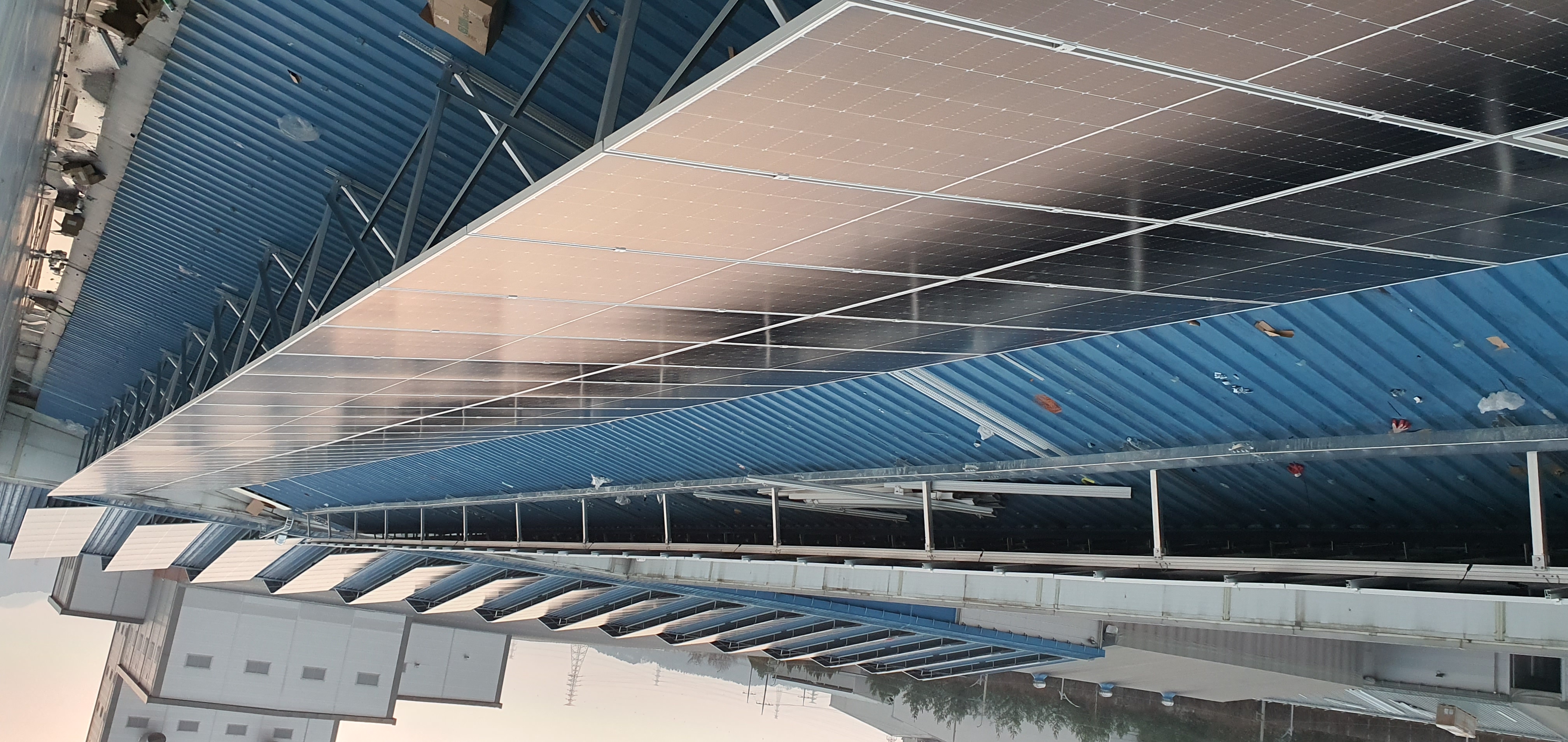
Metal roof PV array installed with the 9Sun Solar solar tin roof mount system (NS-tin roof-2). Image: 9Sun Solar project record.
This comparison is written for installers, distributors, EPC buyers and specifiers who have already decided they need a metal roof solar bracket and are now choosing between two mounting geometries from the same manufacturer, Xiamen 9Sun Solar Technology Co., Ltd. It covers the packaged product facts for both systems, the criteria that actually separate them on a real roof, and the documentation a buyer should request before releasing a purchase order.
The Real Problem: Two Datasheets That Say the Same Thing
Most metal roof mounting shortlists start with a load rating comparison, and on that comparison the NS-mini rail-1 and the NS-tin roof-2 look identical. Both quote ≤80 m/s wind load and ≤150 cm snow load. Both use aluminium AL6005-T5 with stainless steel, both are anodised, both offer silver, black or customised colours, both list CE certification and a 10-year warranty, and both are listed for residential, commercial and industrial, and public and infrastructure projects.
When the specification sheet stops separating two options, the decision moves to variables that datasheets often leave out: the bill of materials, the number of fixing points, how much field adjustment the layout allows, the visual profile of the array and how a module will be replaced five years from now. Three failure modes are common in this situation.
- Comparing rail price per metre instead of installed cost per kW. A mini rail design reduces rail length but does not automatically reduce the number of fixings, clamps or fasteners. The only valid comparison is an itemised bill of materials per kW for each option on the same roof.
- Assuming a mini rail reduces roof penetrations. Penetration count is set by the fixing schedule, which is driven by the roof profile, purlin spacing and sheet thickness — not by the bracket name. Ask for the layout drawing.
- Treating the declared ≤80 m/s wind load as a project approval. The bracket data is a product limit; the applicable wind and snow design values come from the local building code and the roof structure assessment for the specific site.
Industry Background: Aluminium, Regulation and Installation Labour
Aluminium captured 71.5% of the solar PV mounting systems market share by material in 2025, according to Global Market Insights. The same source values the global solar PV mounting systems market at USD 49.7 billion in 2025, with a projection to USD 83.2 billion by 2035. Weight and corrosion behaviour explain that preference, and both products discussed here sit inside that aluminium-dominated category.
Demand is also being pushed by regulation. The California 2025 Building Energy Efficiency Standards (Title 24, Part 6), as published by the California Energy Commission, mandate solar on all new commercial construction starting 1 January 2026. Mandated roof-mounted capacity increases the number of metal roof arrays being built, and more arrays mean more pressure on labour hours per module — which is exactly where a mini rail design and a conventional rail layout diverge commercially.
Xiamen 9Sun Solar Technology Co., Ltd. is a Chinese manufacturer of solar PV mounting structures, founded in 2018, based in Xiamen with its own factory in Quanzhou, Fujian. The company reports an annual production capacity of 2 GW, a monthly capacity of 170 MW, a 7-engineer R&D team, OEM/ODM production for solar mounting structures, a 99% export ratio and a 10-year warranty on its mounting systems with an expected service life of up to 25 years. It states that production is carried out according to GB/T 5237, Japan (JIS) and America (AA) standards, and its factory operates its own extrusion, vertical oxidation and powder coating lines — relevant here because both compared systems depend on extruded aluminium profiles and anodised or coated surfaces.
The Two Systems in Detail
Solar tin roof mini rail system — NS-mini rail-1
- Material: aluminium (AL6005-T5) and stainless steel
- Surface treatment: anodised aluminium
- Wind load: ≤80 m/s
- Snow load: ≤150 cm
- Colour: silver, black or customised
- Warranty: 10 years
- Certification listed in the product record: CE
- Applicable industry: residential, commercial and industrial, public and infrastructure
The mini rail system is the low-profile option in the range: a compact rail design intended for metal sheet roofs, where the rail geometry stays close to the roof surface rather than spanning the array in long continuous runs. Buyers who need a defined part count or per-kW component list should request the bill of materials, because the product record does not publish it.
Solar tin roof mount system — NS-tin roof-2
- Material: aluminium (AL6005-T5) and stainless steel
- Surface treatment: anodised aluminium
- Wind load: ≤80 m/s
- Snow load: ≤150 cm
- Colour: silver, black or customised
- Warranty: 10 years
- Certification listed in the product record: CE
- Applicable industry: residential, commercial and industrial, public and infrastructure
The NS-tin roof-2 is the conventional rail layout in the same family, supported by the larger body of field records in the supplied project data: a 2.5 MW roof project for a South Korean installer (stable operation for 2 years), a 998 kW roof project for a South Korean installer (stable operation for 5 years), a 1.8 MW roof project in Singapore (2 years) and a 2 MW roof project in Singapore (2 years).
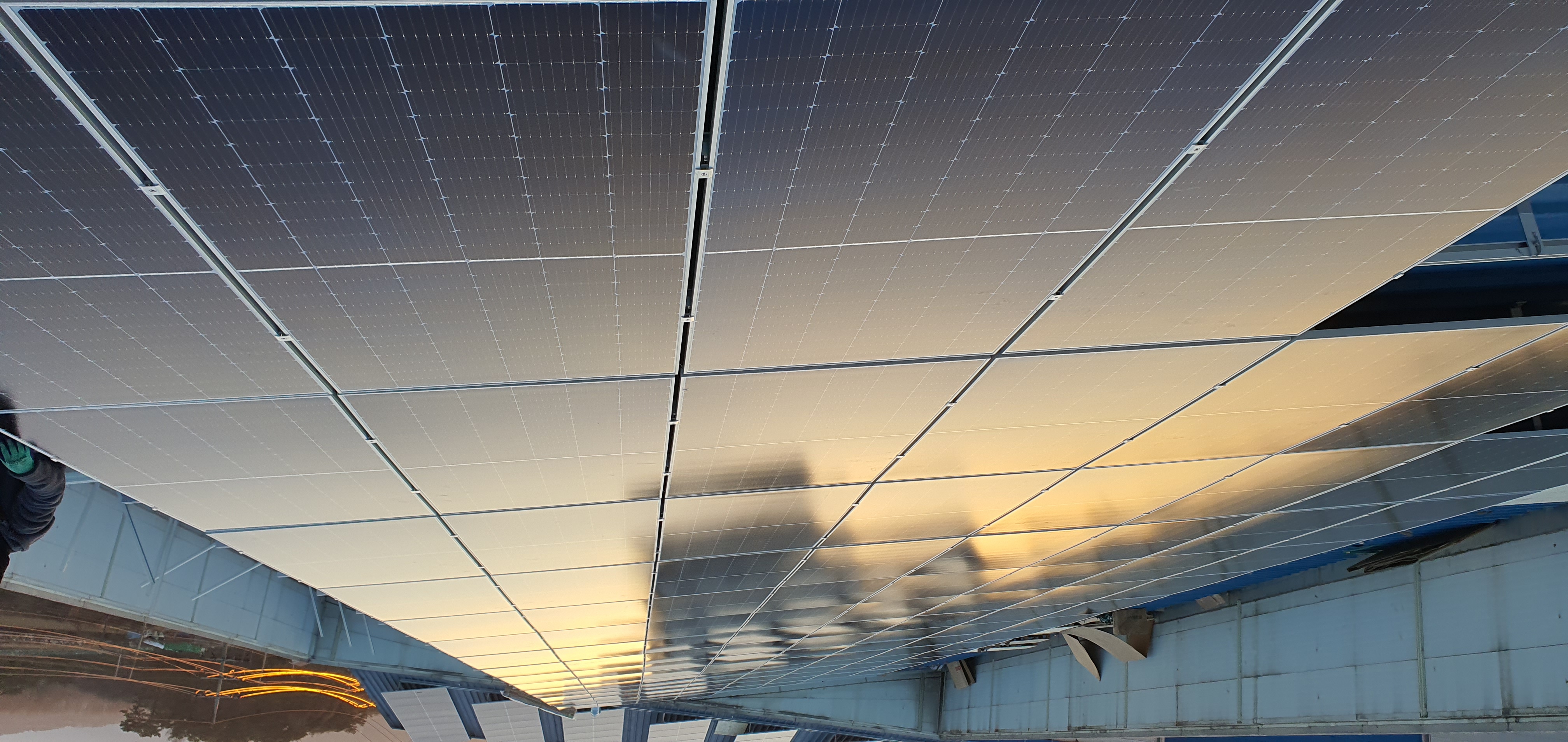
Rail and clamp layout on a metal roof project. Image: 9Sun Solar project record.
What Is Identical — and What That Tells a Buyer
Material grade, fastener material, surface treatment, declared wind and snow limits, colour options, warranty term, certification listing and target industries are the same for both products. A buyer should read this as confirmation that the two options are rated for the same envelope, not as proof that they are interchangeable on a given roof. The declared ≤80 m/s and ≤150 cm values tell you the product family is intended for exposed metal roof conditions; they do not tell you which geometry suits a specific sheet profile, rib spacing or purlin layout.
Where the Two Approaches Actually Diverge
The points below are design-logic comparisons between a mini rail geometry and a conventional rail geometry, applied to these two products. They are the questions to put to the supplier, not published performance claims about either model.
- Rail quantity and handling. A mini rail design uses shorter rail sections, which are easier for one person to carry up a ladder and position on a residential roof. A conventional layout uses longer continuous rails, which usually means two people and more careful handling, but fewer separate rail pieces to line up.
- Part count. Fewer rail metres does not automatically mean fewer components, because short rails can require a denser fixing pattern. Neither product record publishes a parts list, so ask for an itemised BOM per kW for both models on the same roof drawing and compare totals.
- Layout flexibility. A continuous rail lets a module be re-clamped or repositioned along the rail during installation and allows mixed module formats on the same run more easily. A mini rail fixes module positions to the row geometry, so the layout should be finalised before delivery.
- Visual profile. The low-profile mini rail keeps hardware close to the roof plane, which matters where a residential array is visible from the street or from upper windows.
- Service access. With continuous rails, a module can be unclamped and moved along the rail during maintenance. With mini rails, access is managed row by row. Confirm the removal procedure with the supplier before committing a large array.
- Roof interface. Both systems are fixed into metal roof sheeting and are subject to the same rule: the fixing schedule must follow the roof profile and the structural verification for that building.
Note on comparability: the two products quote snow load in centimetres (≤150 cm) rather than kN/m². When comparing either of them with a different 9Sun Solar roof product, convert the units and check the reference basis before drawing conclusions.
Step-by-Step: How to Evaluate the Two Options Before You Order
- Fix the roof inputs first. Collect the sheet profile drawing, rib spacing, purlin spacing, sheet thickness, roof age and any roof warranty conditions. Both systems are metal roof brackets, so the roof — not the bracket — decides the fixing schedule.
- Fix the module inputs. Record module length, width, frame clamp zones and whether the array is portrait or landscape. Both products rely on clamps, so clamp position must fall inside the module frame zone.
- Convert local design loads. Take the wind and snow design values required by the local building code and the site, then check them against the declared ≤80 m/s and ≤150 cm limits. If the site demand exceeds the declared limit, neither model is the answer.
- Request two itemised bills of materials. Ask for a BOM per kW for the mini rail option and the conventional rail option, on the same roof drawing. Compare total component count, fixing count and clamp count — this is where the real cost difference appears.
- Request the documentation package. Confirm the CE documentation and its scope. The CE Attestation of Conformity held on file is certificate No. PRSZ23120603CR, issued 12 December 2023 by PISI, and its stated scope is the RoHS Directive 2011/65/EU Annex II as amended by (EU) 2015/863, tested to IEC 62321-3:2013, IEC 62321-4:2013+A1:2017, IEC 62321-5:2013, IEC 62321-6:2015, IEC 62321-7-1:2015, IEC 62321-7-2:2017 and IEC 62321-8:2017. RoHS scope is not the same as a structural certification, so confirm what is covered for the exact product family you order.
- Check whether your market needs a different scheme. UL 2703 covers photovoltaic mounting systems, mounting devices, clamping or retention devices and grounding lugs for flat-plate modules, as described by UL Solutions. Neither product record lists UL or TUV, so if the destination market or the project's authority requires UL 2703 listing or a TUV certificate, raise it at RFQ stage rather than after delivery.
- Run a pilot roof and confirm supply terms. Order a sample or a single-roof quantity, verify fit against the real sheet profile, then lock quantities. The manufacturer states production can be completed within one week after receiving orders (7-day lead time) against a monthly capacity of 170 MW, and offers OEM/ODM production for custom solar mounting structures.
Use Cases: Which Approach Fits Which Segment
Residential metal roofs. This is where the mini rail design earns its place. Small arrays, visible roof planes, single-installer crews and a preference for hardware that stays close to the roof surface all favour the low-profile approach. The 10-year warranty and the silver or black finish options support the same residential expectation.
Commercial and industrial roofs. Larger arrays on industrial sheet roofs put the emphasis on row alignment, repeatable clamping, serviceability and the ability to adjust during installation — the conventional rail layout is easier to manage at that scale. The NS-tin roof-2 record includes a 2.5 MW roof project and a 998 kW roof project for South Korean installers, both reported as stable operation (2 years and 5 years respectively), plus 1.8 MW and 2 MW roof projects in Singapore, each with 2 years of stable operation.
Public and infrastructure projects. Both products are listed for public and infrastructure use, and in that segment the decision usually turns on documentation: the layout drawing, the certificate scope, the warranty terms and the maintenance procedure must be acceptable to the project reviewer before the geometry discussion even starts.
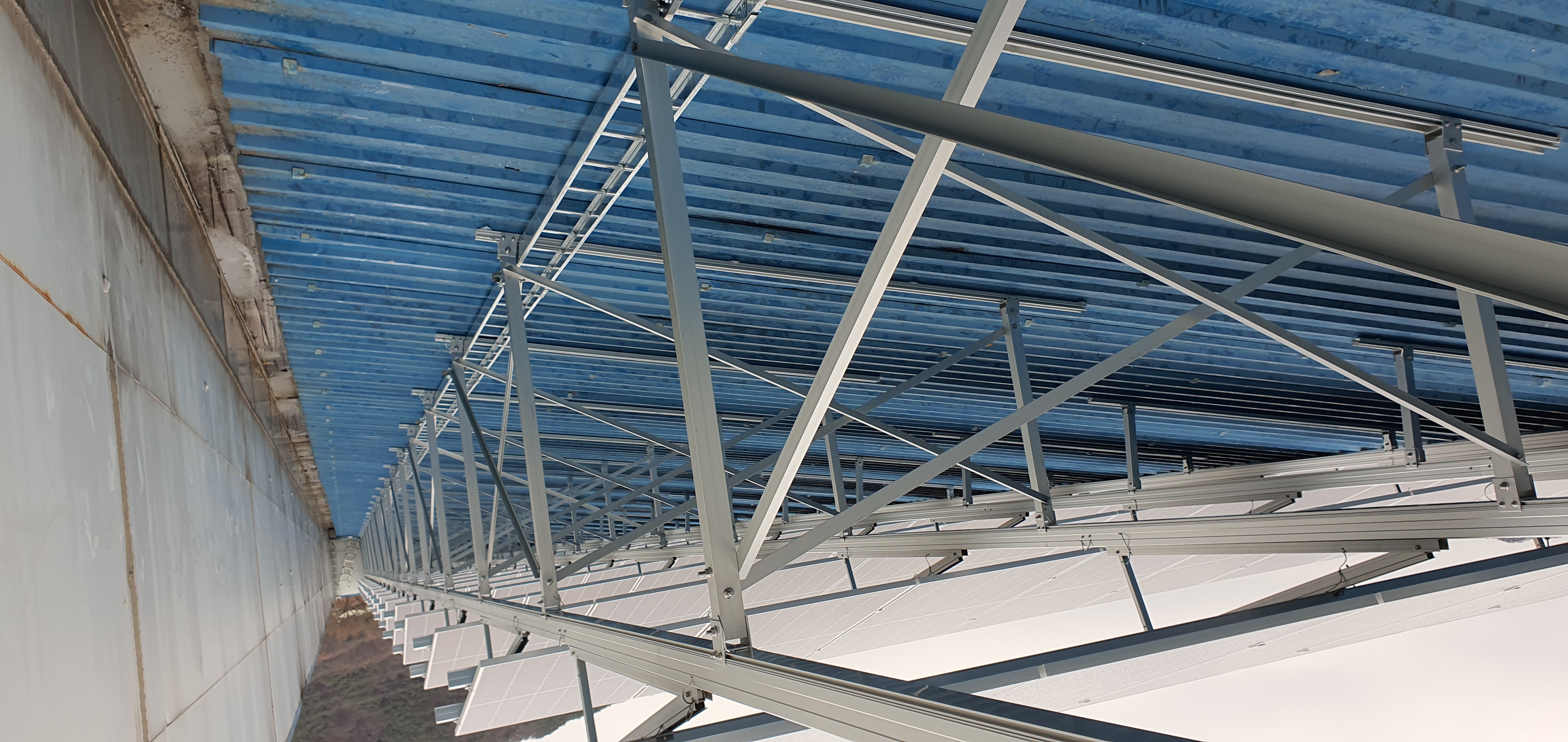
Completed metal roof array in a commercial roof project. Image: 9Sun Solar project record.
Side-by-Side Comparison
| Comparison item | NS-mini rail-1 (solar tin roof mini rail system) | NS-tin roof-2 (solar tin roof mount system) |
|---|---|---|
| Mounting approach | Mini rail geometry, low-profile rail close to the roof surface | Conventional rail layout spanning the roof |
| Material | Aluminium (AL6005-T5), stainless steel | Aluminium (AL6005-T5), stainless steel |
| Surface treatment | Anodised (aluminium) | Anodised (aluminium) |
| Wind load (declared) | ≤80 m/s | ≤80 m/s |
| Snow load (declared) | ≤150 cm | ≤150 cm |
| Colour | Silver, black or customised | Silver, black or customised |
| Warranty | 10 years | 10 years |
| Certification in product record | CE | CE |
| Applicable industry | Residential, commercial and industrial, public and infrastructure | Residential, commercial and industrial, public and infrastructure |
| Part count / bill of materials | Not published in the product record — request itemised BOM per kW | Not published in the product record — request itemised BOM per kW |
| Project records in supplied data | Request application references for mini rail installations | 2.5 MW and 998 kW roof projects (South Korea); 1.8 MW and 2 MW roof projects (Singapore), all reported stable |
| Best-fit segment | Residential and small commercial metal roofs with fixed row layouts | Larger commercial, industrial and public roof arrays needing rail continuity and field adjustment |
Decision Criteria: When Mini Rail Is Preferable
Because the declared wind and snow limits are identical, load figures should never be used to choose between these two models. Use them only to confirm that either model is inside the project envelope. The choice between them should be made on four criteria.
Choose the mini rail design when: the array is residential or small commercial scale; the roof plane is visible from the ground and a low hardware profile matters; the rib layout gives consistent fixing lines so the row geometry can be finalised in advance; and the work will be done by one installer handling material alone. In those conditions the shorter rail sections reduce handling effort, and the fixed layout is an advantage rather than a constraint.
Choose the conventional rail layout when: the array is large enough that row alignment and repeatable clamping dominate installation time; module formats may change or the layout may be adjusted on site; maintenance access along a continuous rail is a project requirement; or the installer wants the field adjustability that a spanning rail provides. The NS-tin roof-2 field record — roof projects of 2.5 MW, 998 kW, 1.8 MW and 2 MW reported as stable operation — sits in this segment.
Ask both times: for the itemised BOM per kW, the layout drawing against the actual sheet profile, and the certificate scope for the exact product family. Those three documents, not the datasheet headline, are what make the two options comparable.
Frequently Asked Questions
Does the CE listing on the mini rail and tin roof systems cover structural performance?
CE is listed in the product records of both the NS-mini rail-1 and the NS-tin roof-2. The CE Attestation of Conformity held on file is No. PRSZ23120603CR, issued 12 December 2023 by PISI, and its stated scope is the RoHS Directive 2011/65/EU Annex II as amended by (EU) 2015/863, with testing to the IEC 62321 series. That is a restricted-substances scope, not a structural certificate. Buyers should request the certificate scope for the exact product family, and should treat UL 2703 and TUV as separate schemes: UL 2703 covers PV mounting systems, mounting devices, clamping or retention devices and grounding lugs, and neither product record lists UL or TUV.
Can 9Sun Solar customise a mini rail or tin roof system for a specific roof and module?
Yes. Xiamen 9Sun Solar Technology Co., Ltd. provides OEM/ODM production services for solar mounting structures, including custom solar bracket manufacturing and custom ground-mount designs, and states that structures are designed according to the terrain, climate, module specifications and foundation conditions of the project — covering dimensions, material corrosion protection and connection nodes. The company reports a 7-engineer R&D team, a monthly capacity of 170 MW and a 2 GW annual capacity, with colour options including silver, black or customised on both compared systems.
Is a mini rail system cheaper than a conventional tin roof rail layout?
The supplied product data does not include prices, so no cost comparison should be assumed from the model names. The commercially relevant comparison is installed cost per kW: mini rail reduces rail length but can increase fixing density, while a conventional layout uses more rail metres with fewer separate rail pieces. Request an itemised bill of materials per kW for both options on the same roof drawing, and confirm commercial terms at quotation stage.
Can I validate the fit on a small order before committing to a project quantity?
Yes. The manufacturer states 100% testing and pre-shipment test as its quality control basis, and supports sampling and pilot orders before volume release. Because both systems depend on clamps falling inside the module frame zone and fixings matching the sheet profile, a single-roof pilot against the real roof drawing is the fastest way to confirm the geometry before scaling. The product catalogue is available for download for the full range.
What lead time and warranty apply to these metal roof systems?
The manufacturer states a 7-day lead time, with production at the earliest completed within one week after receiving orders, supported by a monthly capacity of 170 MW. Both the NS-mini rail-1 and the NS-tin roof-2 carry a 10-year warranty, and 9Sun Solar states a service life of up to 25 years under proper use. Where a project needs a specific delivery schedule, confirm it at quotation stage before releasing the order.
Conclusion
The NS-mini rail-1 and the NS-tin roof-2 are two answers to the same metal roof question, engineered to the same material and load envelope: aluminium AL6005-T5 with stainless steel, anodised finish, ≤80 m/s wind, ≤150 cm snow, CE in the product record and a 10-year warranty. The mini rail design wins where the roof is visible, the array is modest and one installer is handling the material; the conventional rail layout wins where the array is large, the layout may shift on site and service access along a continuous rail matters. Neither decision should be made on the load numbers, because on this pair the load numbers are the same.
Before ordering either, ask for three documents: the itemised BOM per kW for both options against your roof drawing, the layout drawing matched to your sheet profile and purlin spacing, and the certificate scope for the exact product family. Those three answers turn a datasheet comparison into a procurement decision.
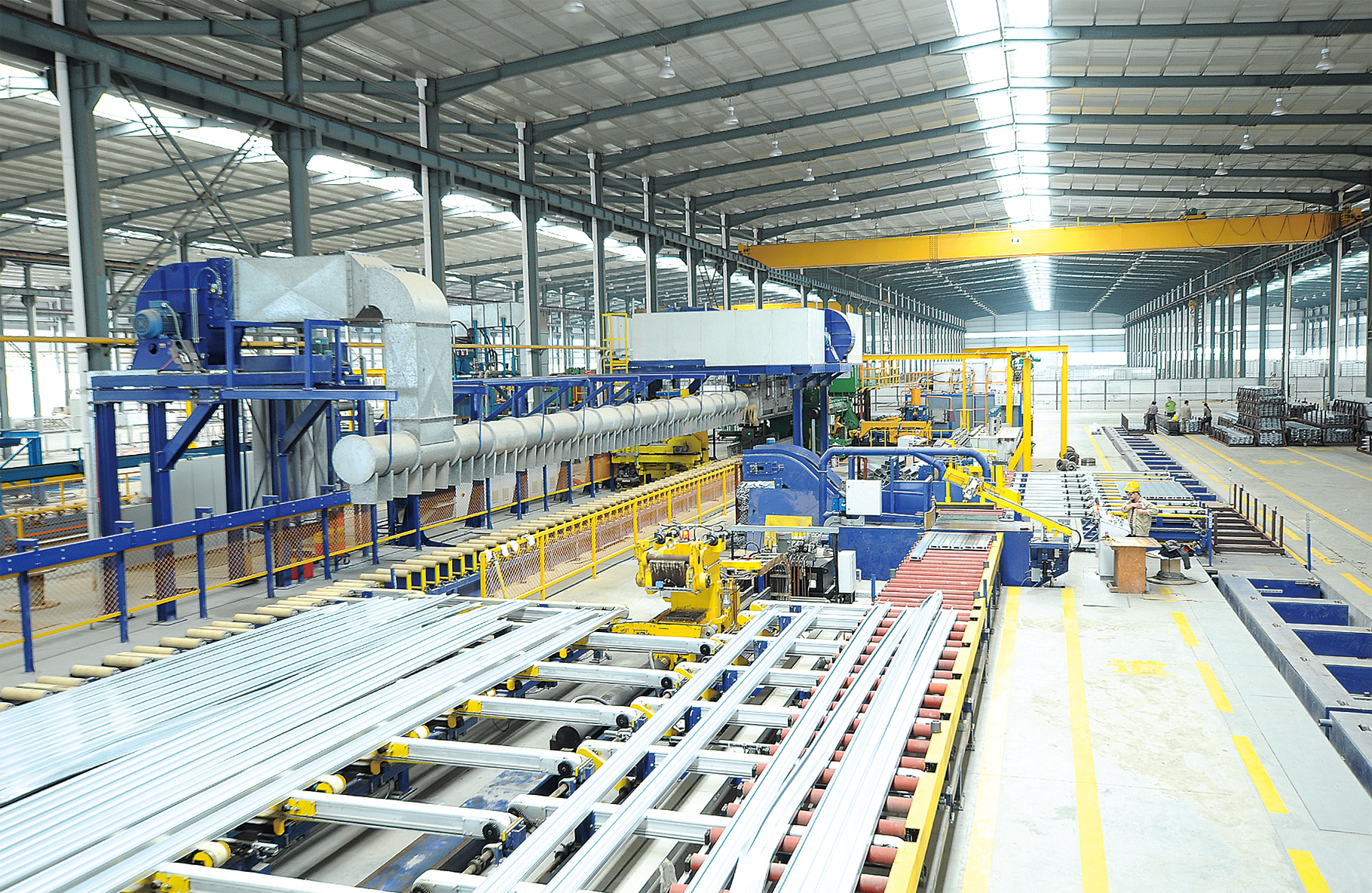
Aluminium extrusion line at the 9Sun Solar factory in Quanzhou, Fujian. Image: 9Sun Solar.
Next step: compare the two options on your own roof drawing
Send the sheet profile, purlin spacing and module dimensions, and 9Sun Solar can return a layout drawing and an itemised BOM for both the mini rail and the conventional tin roof option, plus a sample or single-roof quotation. Full specifications for the range are in the 9Sun Solar product catalogue (PDF).
Xiamen 9Sun Solar Technology Co., Ltd. — www.9sunsolar.com
Email: exp@9sunsolar.com | Tel: +86 18959234313 | WhatsApp: +86 13599517330
Address: 1706, No. 503 Gaolin Middle Road, Huli District, Xiamen City, Fujian Province
Have Questions or Need More Details?
Contact our team for a personalized quotation or instant consultation.
Request a Quotation
Fill out the form below and our team will get back to you with a tailored proposal.
WhatsApp Direct Chat
Prefer to chat in real-time? Message us on WhatsApp for instant assistance & quick answers.
- Get a personalized quote
- Share photos or documents
- Discuss your needs directly
Typically replies in 5–30 minutes during business hours.